Most people think in days, weeks, or goals.
But life doesn’t happen there.
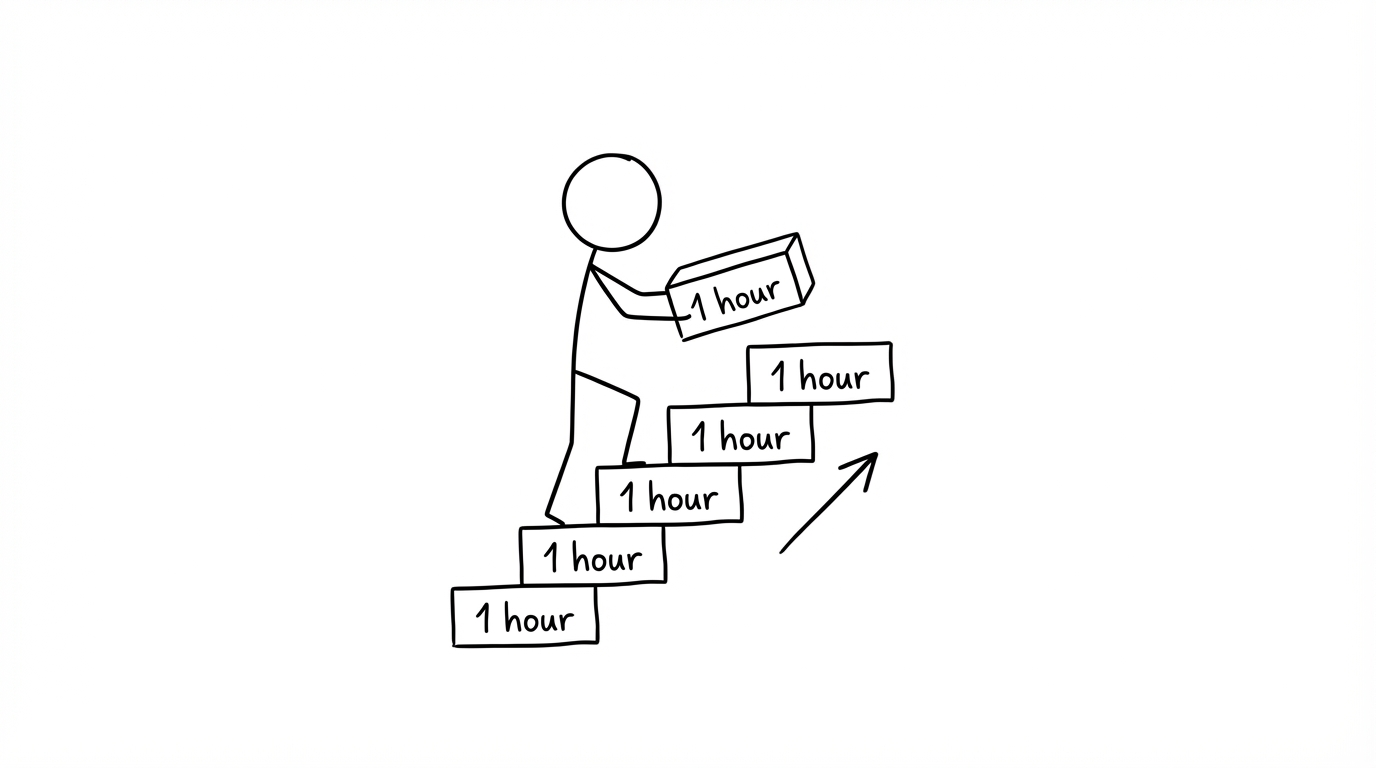
Life happens in hours.
An hour is small enough to waste easily and powerful enough to change everything.
That’s why it matters.
Why the hour deserves attention
An hour is long enough to do meaningful work. It’s also short enough to feel manageable.
When hours are unplanned, days blur together. When hours are designed, days feel intentional.
Productivity isn’t about doing more in a day. It’s about deciding what each hour is for.
The problem with reactive hours
Most hours are spent reacting:
- messages
- requests
- interruptions
- context switching
Nothing feels finished. Energy drains faster than expected.
At the end of the day, you were busy — but not fulfilled.
That’s not a motivation problem. It’s a design problem.
Design the hour, not the whole day
You don’t need a perfect schedule.
You need protected hours.
When an hour has a single purpose, the mind relaxes. It knows what it’s there to do.
This is why block time works.
Not because it’s rigid — but because it removes ambiguity.
What block time really is
Block time is simply this:
One hour. One focus. No negotiation.
It’s not about squeezing more in. It’s about letting one thing matter.
When you give an hour a job, distractions lose their power.
Fewer hours, better results
You don’t need to block your entire day.
In fact, that often backfires.
One well-designed hour can:
- move an important project forward
- restore a sense of control
- change how the rest of the day feels
Momentum doesn’t come from intensity. It comes from clarity.
Hours create days
If your hours feel scattered, your life will too.
But when even one hour is intentional, something shifts.
You start trusting your time again.
That’s where progress begins.
One action
Choose one hour tomorrow.
Just one.
Decide in advance what it’s for. Protect it from interruptions. Do only what that hour is meant to do.
You don’t need to redesign your life.
Design one hour — and let it prove the point.
That’s Lifetime Designer thinking.