Reactive or Proactive - You Choose the Mode
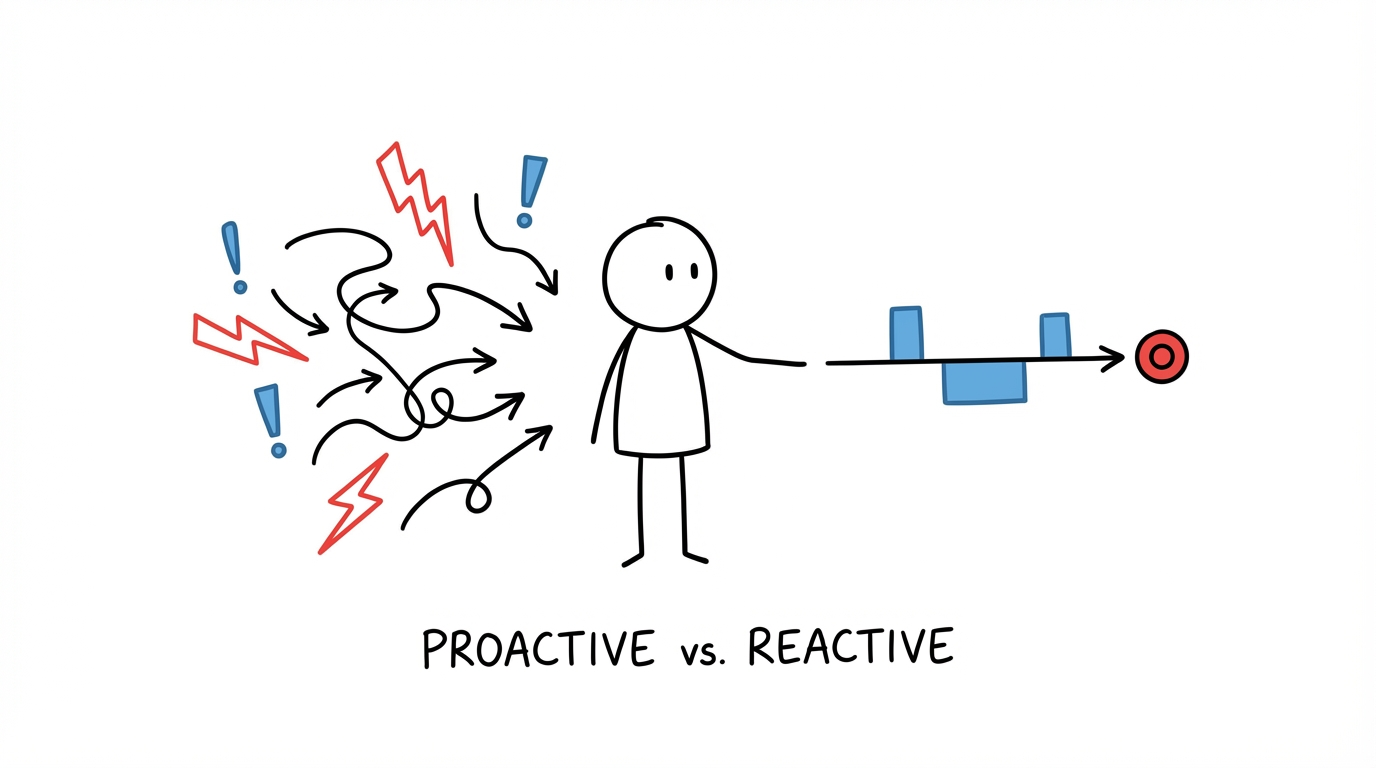
There are two ways to move through life.
You either react to what shows up. Or you decide what matters and act first.
Both modes exist in everyone. But they create very different days.
What reactive living feels like
Reactive mode starts with response.
Emails decide your priorities. Other people’s urgency becomes your schedule. Problems pull your attention without warning.
You stay busy. But progress feels accidental.
Reactive days often end with fatigue and the feeling of being behind.
What proactive living looks like
Proactive mode starts with intention.
You decide what matters before the day begins. You create space for important work. You act before pressure forces your hand.
This doesn’t mean controlling everything. It means choosing what deserves your energy first.
Proactive days feel calmer, even when they are full.
Why reactivity is so common
Reactive mode feels necessary.
Messages arrive. Requests appear. Unexpected issues happen.
Reacting feels responsible. Ignoring feels risky.
But when everything is urgent, nothing is important. And life becomes a series of responses instead of choices.
Proactive doesn’t mean rigid
Being proactive doesn’t mean ignoring reality.
It means setting direction, then adjusting as needed. You still respond. But you respond from a place of clarity.
Too much proactivity creates pressure. Too much reactivity creates chaos.
The goal is balance, not control.
Small proactive choices change the day
Proactivity doesn’t require big plans.
It can be as simple as:
- deciding your top priority before opening email
- blocking time for focused work
- addressing a small issue before it grows
These small choices reduce future stress. They prevent emergencies instead of reacting to them.
Awareness creates the shift
The most important skill is noticing the mode you are in.
Ask: "Am I choosing this, or reacting to it?"
That question alone creates space. And space creates choice.
One action
Decide one priority before the day starts tomorrow.
Write it down. Protect a small block of time for it.
Act first. Then react.
That’s how proactive days begin.