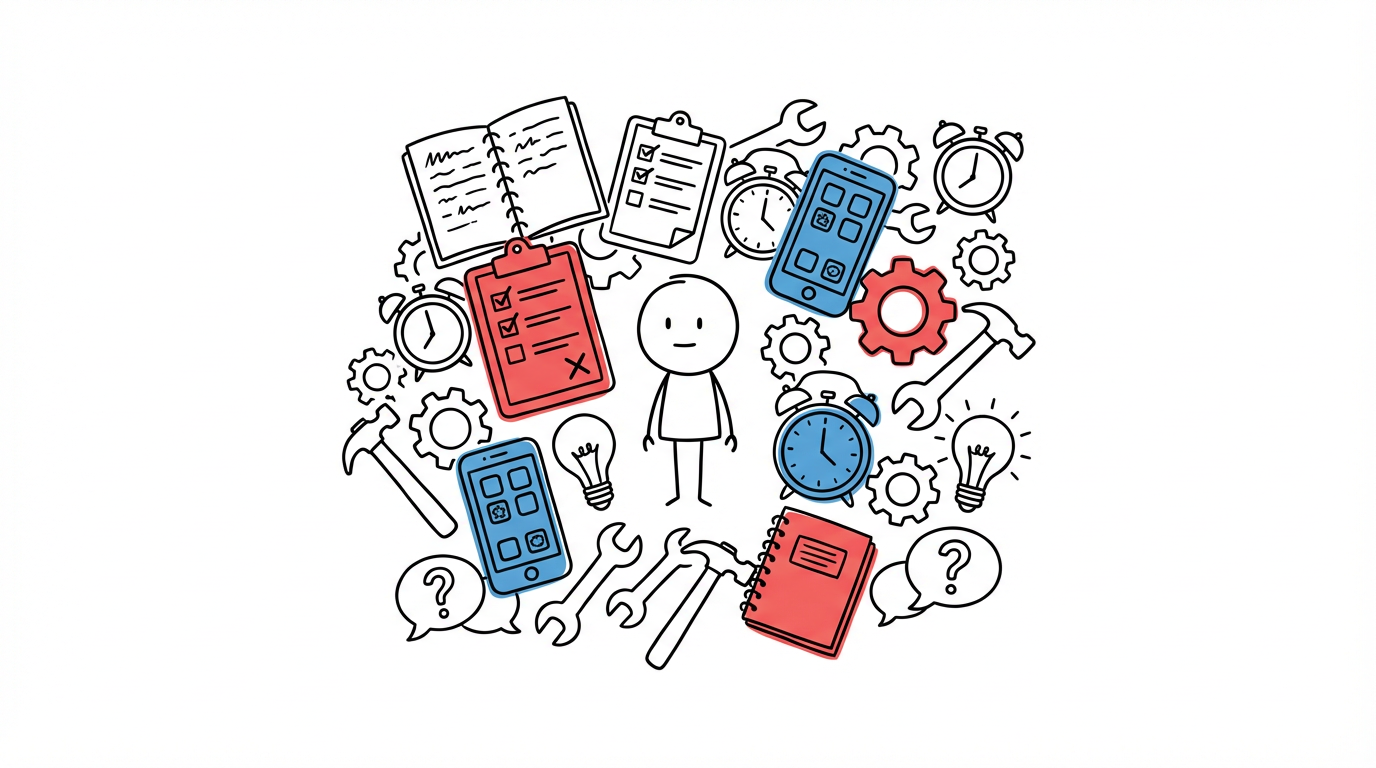
There’s no shortage of tools to help you plan your day.
Calendars. Task managers. Timers. Assistants. Trackers.
Yet many people still feel scattered.
That’s because tools don’t create clarity. Decisions do.
Why more tools don’t help
Most tools are good at organizing information. Very few help you decide what matters.
When you rely on tools without intention:
- lists get long
- calendars get crowded
- days feel busy but unfocused
The problem isn’t the tools. It’s using too many of them at once.
What tools are actually good for
Each tool has a narrow strength.
- Calendars are good for commitments
- To-do lists are good for remembering
- Timers are good for protecting focus
- Trackers are good for revealing patterns
None of them should decide your priorities. That job belongs to you.
Simplicity beats feature-rich
The more features a tool has, the more decisions it asks you to make.
Colors. Tags. Statuses. Notifications.
Those decisions drain energy before the work even begins.
A simple system is easier to trust. And trusted systems get used.
One job per tool
Tools work best when each has a single role.
For example:
- One calendar for appointments
- One list for daily priorities
- One timer for focused work
When tools overlap, confusion grows. When roles are clear, planning feels light.
Paper still has a place
For many people, paper works better for thinking.
No notifications. No formatting. No distractions.
That’s why planning the day, journaling, and reviewing often work best off-screen.
Digital tools store information. Paper helps you decide.
The goal isn’t productivity
The goal is clarity.
Tools should make the day feel simpler, not more managed.
When planning feels heavy, you’re using too many tools — or asking them to do the wrong job.
One action
Choose one tool for planning tomorrow.
Just one.
Use it to decide:
- what matters most
- what can wait
Ignore the rest for the day.
When the tools are quiet, decisions become clear.